I.S. Circuits - Parallel and Series
Published
Read Time: 5 mins
AS/NZS 60079.25:2011 Annex B describes the analysis and use of parallel intrinsically safe circuits and is entitled: “Assessment of Circuits with more than One Source of Power”. This analysis is only applicable when the power sources considered use a linear resistive limited output. It is not applicable to power sources using other forms of current limitation.
Series Circuits
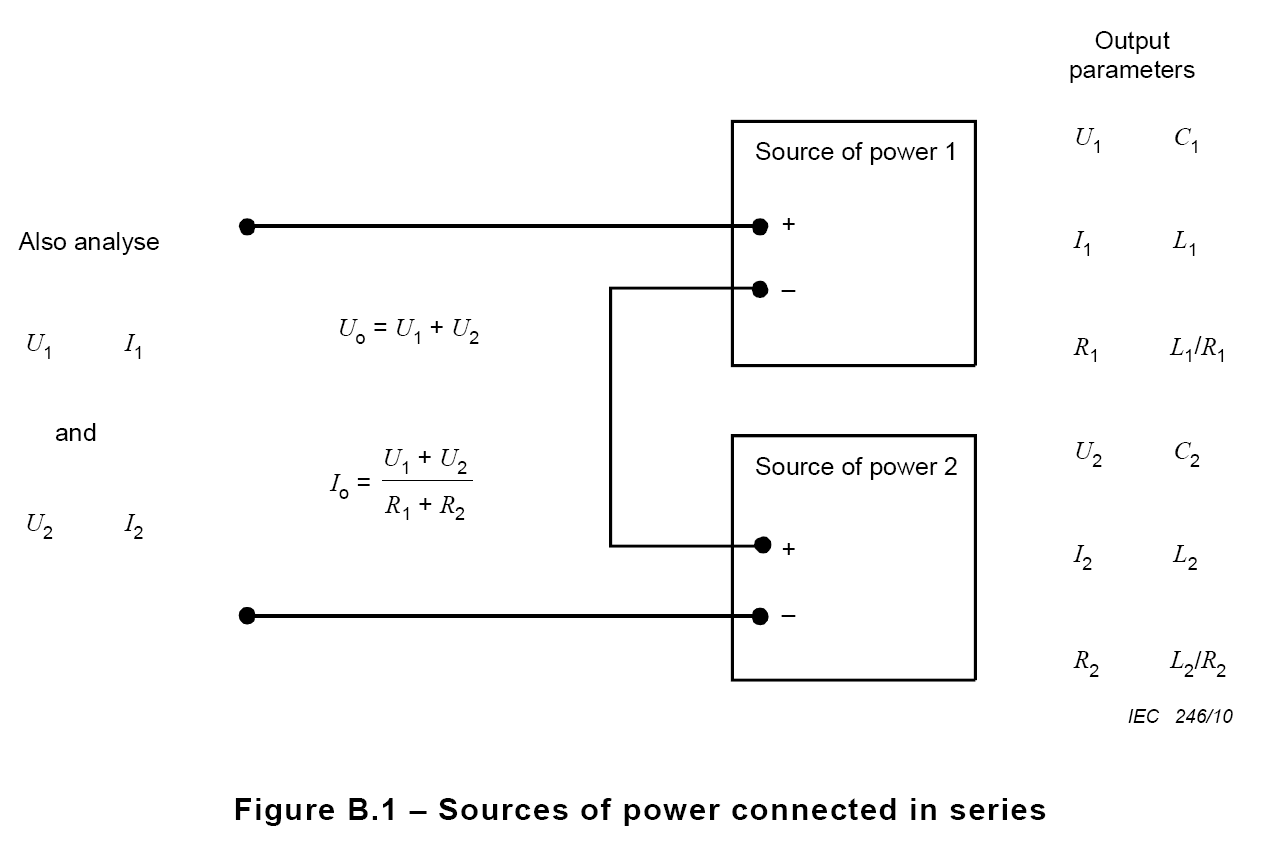
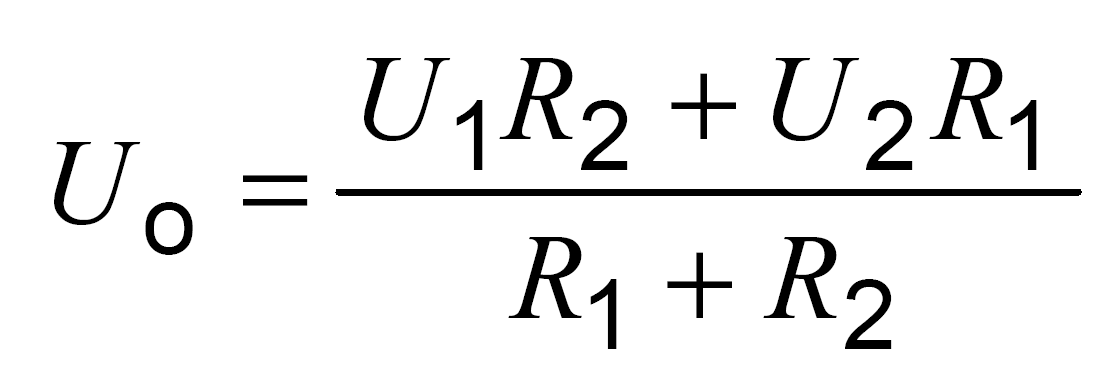
Figure B.1 below illustrates the usual series combination. This series situation results in the open circuit voltage Uo being U1 + U2 (but the possibility of the voltage being U1 – U2 is not considered). Considering the safety of the system, three voltages U1, U2 and Uo = U1 + U2 are considered together with their corresponding currents I1 and I2 combined:
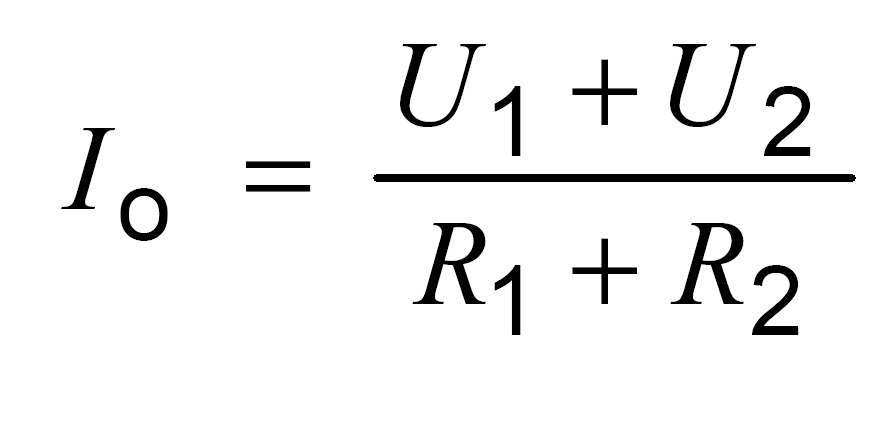
Each of the three equivalent circuits has to be assessed for safety using the table showing the permitted short-circuit current corresponding to the voltage and the apparatus group of AS/NZS 60079-11. The value of Lo, or optionally Lo/Ro and Co shall then be established for each circuit and the most onerous value used together with its relevant equivalent circuit. For level of protection “ia” and “ib” a factor of safety 1.5 shall be used in determining these values in all circumstances. For “ic” a safety factor of 1.0 is sufficient.
The matched power available from each of the equivalent circuits shall be determined. The matched power of the combined circuit is the sum of the power available from each circuit only when the sources have the same output current.
Parallel Circuits
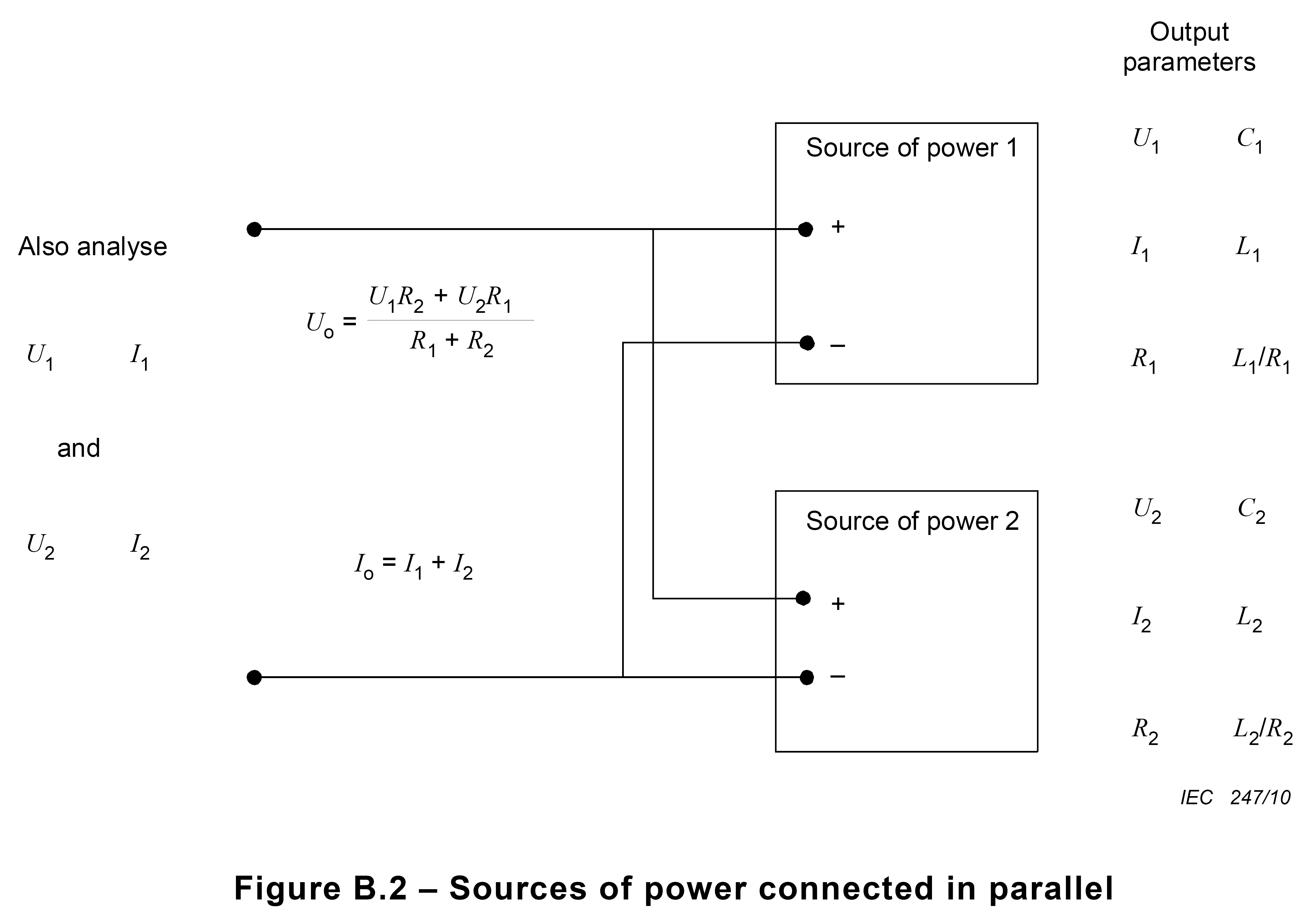
When the sources of power are connected in parallel as in Figure B.2, then the three currents I1, I2 and Io = I1 + I2 have to be considered with their corresponding voltages U1, U2:
Each of the three equivalent circuits has to be assessed for safety using the table showing the permitted short-circuit current corresponding to the voltage and the apparatus group of AS/NZS 60079-11. The values Lo, or optionally Lo/Ro and Co have to be established for each circuit and the most onerous value used together with its relevant equivalent circuit. The matched power available from each of the three equivalent circuits shall also be established. The matched power of the combined circuit is the sum of the power available from each circuit only when the sources have the same output voltage.
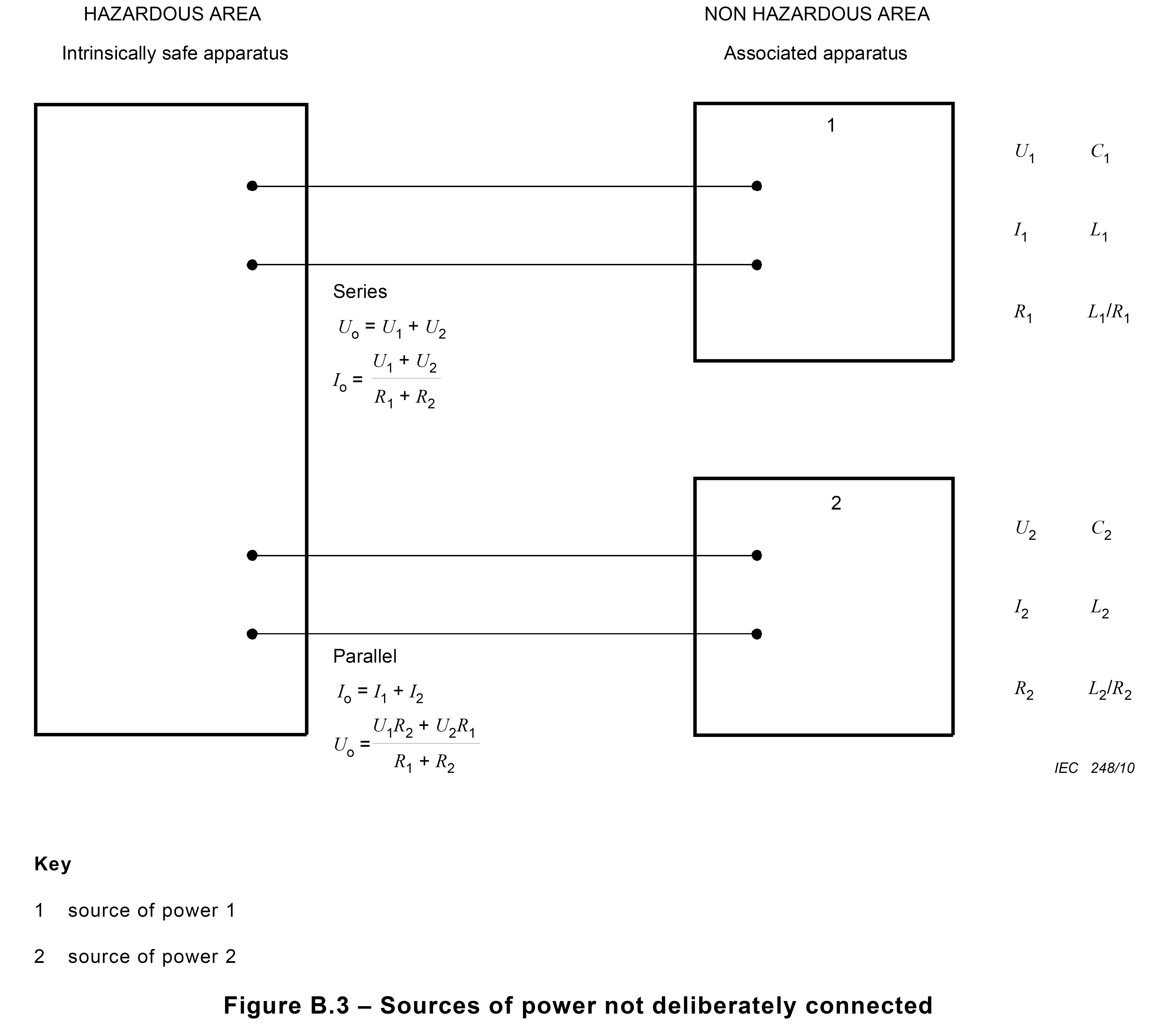
Series and Parallel Combination
Where two sources of power are connected to the same intrinsically safe circuit and their interconnections are not well defined by reliable interconnections as illustrated in Figure B.3, there is a possibility that the sources of power can be connected in both series and parallel. In these circumstances, all the possible equivalent circuits shall be evaluated, following both the procedures set out. The most onerous output parameters and equivalent circuits shall be utilized in establishing the integrity of the intrinsically safe system.
The hazardous area apparatus may contain a source of power, which results in the apparatus having output parameters, for example from
internal batteries. When this occurs, the analysis of the system shall include the combination of this source of power with any source of
power in the associated apparatus. Such an analysis shall normally include the reversal of the interconnection because of the possible
failure of the field wiring.
Having established the representative equivalent circuits, these circuits can be used as if there was a single source of power, and the procedure already discussed in Annex A can be used to establish whether the system as a whole is acceptably safe.
When two or more sources of power with different output voltages are interconnected the resultant circulating current can cause additional dissipation in the regulating circuits. Where the circuits have conventional resistive current limiting, the additional dissipation is not considered to adversely affect intrinsic safety.
This material is produced by HAZ. The information is of a general nature only and should not be relied upon. Each set of
circumstances associated with compliance of hazardous
areas and Type
B compliance
is unique and expert advice on your particular circumstances should be sought. HAZ accepts no liability for any reliance on the
information published on this website.