What are EPLs
Published
Read Time: 5 mins
EPL Definition
EPL is the acronym for Equipment Protection Level. These are defined in AS/NZS 60079.26:2015 (based on IEC 60079.26 Ed. 3.0 (2014). In essence, an EPL rating indicates the number of protection levels that exist within a device or assembly of devices.
EPL Levels
Mining
EPL Ma: Equipment for installation in a mine susceptible to firedamp*, having a “very high” Level of Protection, which has sufficient security that it is unlikely to become an ignition source in normal operation, during expected malfunctions or during rare malfunctions, and may be left energized even in the presence of an outbreak of gas
EPL Mb: Equipment for installation in a mine susceptible to firedamp*, having a “very high” Level of Protection, which has sufficient security that it is unlikely to become an ignition source in normal operation, during expected malfunctions or during rare malfunctions, and may be left energized even in the presence of an outbreak of gas
Flammable Gases and Vapours
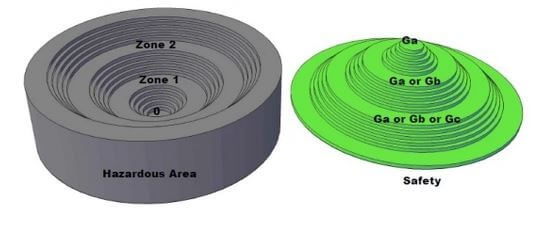
EPL Ga: Equipment for explosive atmospheres due to the presence of gas, with a level of protection 'very high',
which is not a source of ignition in normal operation, or in case of expected failure or when subjected to a rare failure.
EPL Gb: Equipment for use in explosive atmospheres due to the presence of gas, with a 'high' level of protection that is not the source of ignition in normal operation or when subject to expected malfunctions, although not on a regular basis.
EPL Gc: Equipment for use in explosive atmospheres due to the presence of gas, with a level of protection “increased” that is not a source of ignition in normal operation. It has some additional security measures in order to ensure that it remains a source of ignition not active in case of expected events on a regular basis (for example, the failure of a lamp).
Combustible Dusts
EPL Da: Equipment for explosive atmospheres due to the presence of combustible dust, which has a level of protection
'very high' and does not constitute a source of ignition in normal operation or when subject to rare failures.
EPL Db: Equipment for explosive atmospheres due to the presence of combustible dust, which has a level of protection 'high'. It does not constitute a source of ignition in normal operation or when subject to expected failures, although not on a regular basis.
EPL Dc: Equipment for explosive atmospheres due to the presence of dust, with a level of protection 'increased', which is not a source of ignition in normal operation. It may have additional protections in order to ensure that it remains inactive as a source of ignition in the case of regular and waited failure.
Zones Vs EPL
| Hazard Type | Zone Type | EPL Required |
|
Group I Mining |
0 | Ma |
| 1 | Ma,Mb | |
|
Group II Flammable Gases & Vapours |
0 | Ga |
| 1 | Ga,Gb | |
| 2 | Ga,Gb,Gc | |
|
Group III Combustible Dusts |
20 | Da |
| 21 | Da,Db | |
| 22 | Da,Db,Dc |
Examples of EPL Application
More than one type of protection may be used simultaneously. Both Ex d and Ex e alone have an EPL of Gb. However, if the Enclosure is Ex d and the internal Terminals are Ex e (a terminal box on a motor, for example) then the combined EPL would be Ga:
Ex d+e IIB T4 Ga
The same follows for the next example – and Ex d enclosure with equipment installed inside which has Ex ia outputs. While the entire intrinsically safe device is (in this case) associated apparatus – such as a Zener Barrier or Isolator – The EPL assignment would be as follows:
Ex ia/d IIC T6 Ga/Gb
Use
EPLs are marked on recently certified equipment and on recent hazardous area classification drawings.
Further Application
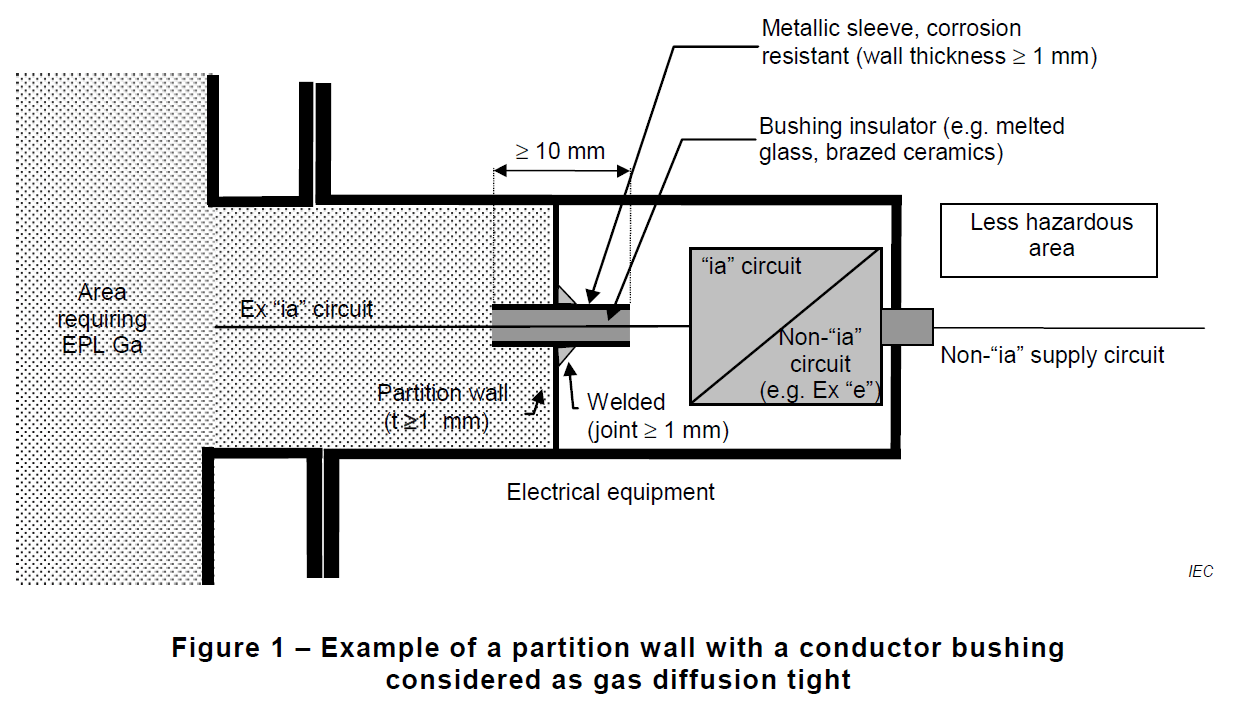
Where a unique/novel solution is required for a hazardous area installation, a combination of constructional and electrical means can be used. Refer to Figure 1 of AS/NZS 60079.26 (below).
Summary
The use of EPL’s in the design of a hazardous area installation can result in novel and time saving solutions which will maintain the correct Equipment Protection Level.
This material is produced by HAZ. The information is of a general nature only and should not be relied upon. Each set of
circumstances associated with compliance of hazardous
areas and Type
B compliance
is unique and expert advice on your particular circumstances should be sought. HAZ accepts no liability for any reliance on the
information published on this website.