Basics Of Explosion Protection Techniques

Published
Read Time: 5 mins
What is a Hazardous Area?
A Hazardous Area, in terms of flammable gases and vapours, is an area where the gas or vapour exists, at a level that is within the Flammable Range.
The best way to manage a Hazardous Area is to not create one in the first place. However, in the real world, this is rarely possible.
The infernal triangle
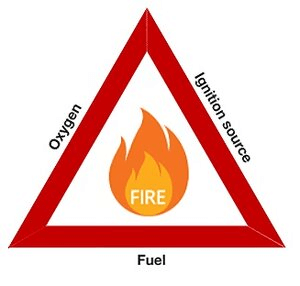
In order for anything to burn or explode, the following requirements for combustion must exist at the same time:
- Fuel (anything that will burn)
- Oxygen (air is 20.946% Oxygen)
- An Ignition Source of sufficient energy to ignite the fuel in air.
All Explosion Protection Techniques use one strategy or other to:
- Contain,
- Modify or Limit, and
- Remove.
one of the above three requirements for combustion.
Explosion Protection Strategies
There are a number of proven explosion protection strategies (Explosion Protection Techniques) employed in hazardous area industries.
Containment
A Flameproof Enclosure (type of protection Ex d) does not prevent the external flammable atmosphere from gaining entry to it. Normal commercial grade electrical equipment can be installed in these enclosures. The Ex d enclosure is designed to withstand an internal explosion, but not transmit the flame through any flanges, spigots or threads (referred to as ‘flamepaths’) to the outside flammable atmosphere. This is probably the most common of Protection Techniques, and is used in underground coal mines, and surface industries.
Modify or Limit
Protection by Increased Safety – Ex e
An Increased Safety Enclosure (type of protection Ex e) prevents ignition by modifying the electrical design of all the components within the enclosure such that any heating, sparking or arcing is unlikely. The quality of the insulation of all components must be superior to “standard” insulation, and clearance distances between electrical terminals are such that the rated voltage in the circuit cannot create an arc or spark.
So, what we are doing is “increasing the safety” of the installed equipment. Again, note that there is no attempt to prevent the flammable atmosphere from entering the enclosure. The inside of such an enclosure has the same flammable atmosphere as the external environment. However, the equipment design has been MODIFIED to ensure that nothing installed could possibly be an IGNITION SOURCE, by correct DESIGN.
Ex e is also a common technique used in many installations.
Intrinsic Safety Ex i
Equipment which uses the Ex i technique is said to be INTRINSICALLY SAFE. The delivered and the stored energy within an Intrinsically Safe equipment is limited by design to ensure:
- No component can become hot enough to ignite the flammable atmosphere
- The amount of energy available to the hazardous area is insufficient to ignite a particular flammable atmosphere
- The worst case value of any energy storing components (Capacitors and Inductors) has been carefully analysed
- That all components upon which intrinsic safety depends, are “infallible” in that they are very unlikely to fail due to ratings and redundancies, and that no internal faults in the intrinsically safe device can defeat the safety components.
- Connection parameters, called “Entity Parameters”, established at the time of certification, have been established, to allow the connection of only compatible equipment.
Ex i is also a common technique used in many installations.
Remove
It is very rare that the flammable atmosphere itself can be removed. However, the next best thing is to remove the equipment from the flammable atmosphere itself. There are several techniques that “remove” the equipment from the hazardous atmosphere by various means. A sample of these techniques are listed below:
Ex m – Encapsulation
This isolates the equipment from the flammable atmosphere by encapsulating a component or assembly of components. This is commonly used with intrinsically safe barriers, and small transformers.
Ex q – Sand Filling
This too, excludes the flammable atmosphere, as the “sand” covers the component which is then sealed to contain the sand. The logic is that small voids in the sand (or material used) will have sufficient volume to support combustion.
Ex p – Pressurisation with an Inert Gas (Nitrogen)
If all the electrical components within an enclosure are blanketed with Nitrogen, which is held at a pressure greater than atmospheric pressure, then the flammable atmosphere cannot enter the enclosure and all risk of ignition is removed. This does, however, require design accommodate start up, shut down and pressure monitoring, complete with safety functions, like shutting down if there is a loss of containment of the inert gas.
In Summary
There are many more explosion protection techniques which used the earlier suggested strategies. A more complete discussion on each technique is a presentation in itself. Refer to the “Pocket Guide” for each technique.
This material is produced by HAZ. The information is of a general nature only and should not be relied upon. Each set of
circumstances associated with compliance of hazardous
areas and Type
B compliance
is unique and expert advice on your particular circumstances should be sought. HAZ accepts no liability for any reliance on the
information published on this website.