Flare Repairs
Published
Read Time: 5 mins
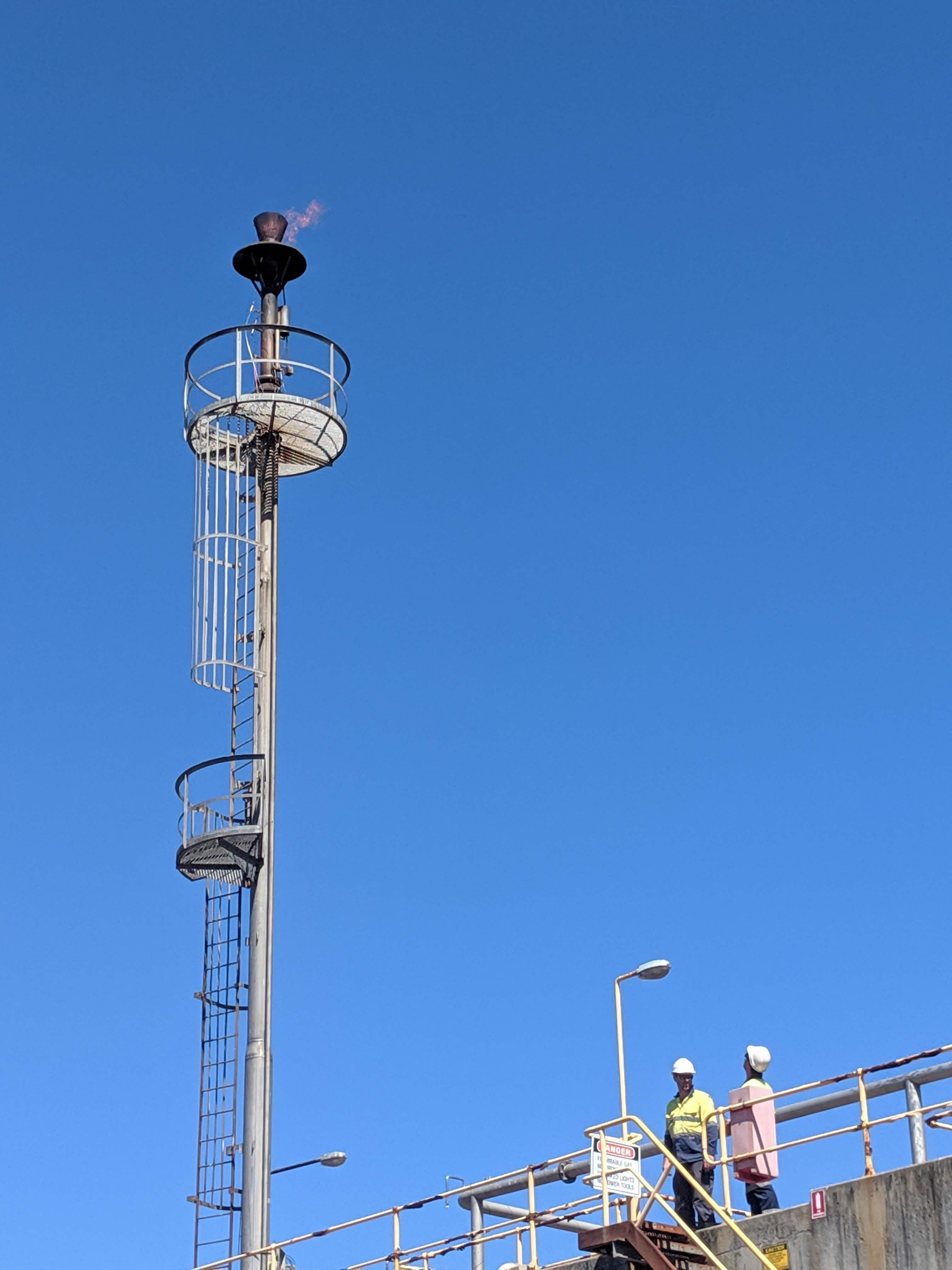
The Team were engaged to investigate why a Biogas flare was not operational and found that the ignitor system was corroded beyond repair. Although a relatively easy fix the challenge was that it was approx. 30 meters in the air and could only be accessed via an EWP, which introduced its own challenges. The flare system is the last line of defence and, if out of commission, can cause the shutdown of the entire facility or the potential catastrophic failure of the facility.
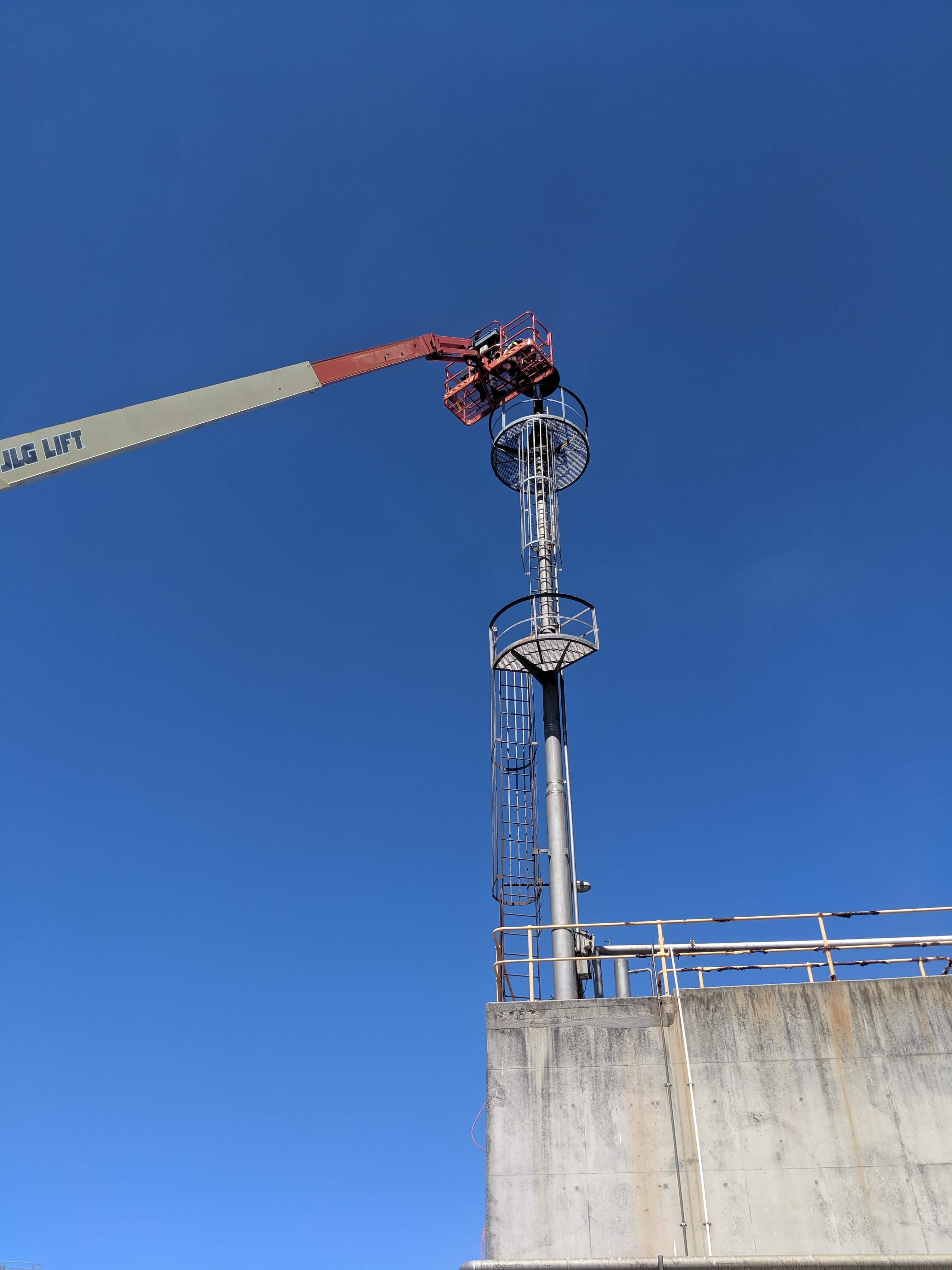
Biogas tends to corrode metals which are not properly protected. This was evident at the base of the flare and settling tanks. The root cause for the ignitor system failure was likely lack of maintenance and potentially poor design of the ignitor system which was being affected by the heat from the flame.
The HAZ scope was to get the flare operational so that the excessive biogas could be flared rather than vented.
The flare is now operational but further works are required to make sure the system operates as intended and meets compliance to the relevant standards.
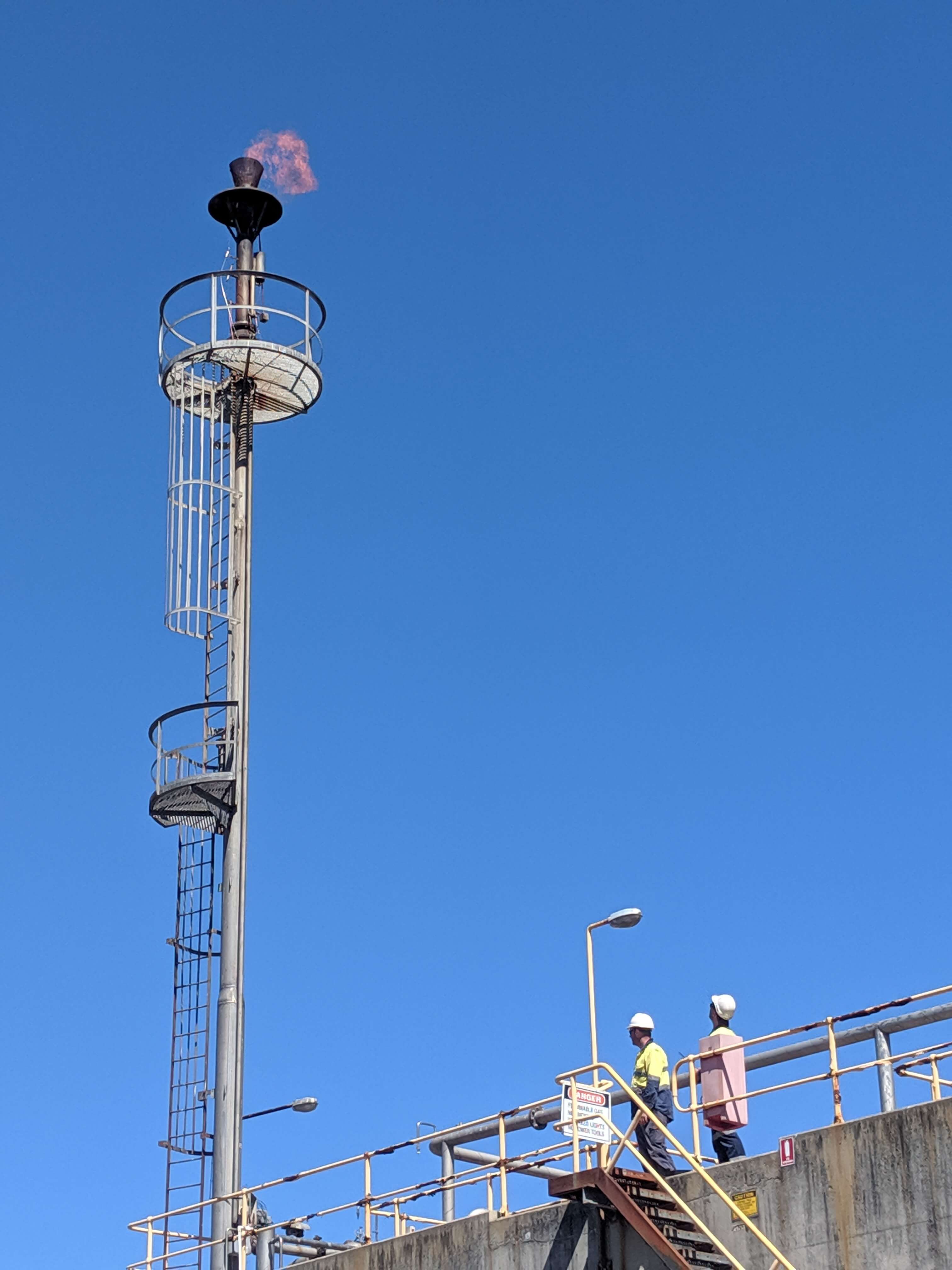
The flare is a last line of defence in any safe emergency release system for combustible and toxic gases such as biogas. The correct disposal of process and waste biogases during routine operation, start-up, shutdown and/or emergency conditions is crucial to ensure operating facilities protect property, personnel, the surrounding community and the environment.
A flare can only achieve its objective of safe, effective disposal if the exiting gases are ignited and the ignition is sustained. Flare ignition failure may lead to unburned venting of dangerous and toxic gases and unless properly catered for in the design, may develop into an explosive and/or toxic hazard leading to the loss of property and equipment, or worse, injury to personnel or loss of life.
This material is produced by HAZ. The information is of a general nature only and should not be relied upon. Each set of circumstances associated with compliance of hazardous areas and Type B compliance is unique and expert advice on your particular circumstances should be sought. HAZ accepts no liability for any reliance on the information published on this website.