Condition of Control - Generator within Zone 2
Published
Read Time: 5 mins
Condition of Control - Generator within Zone 2
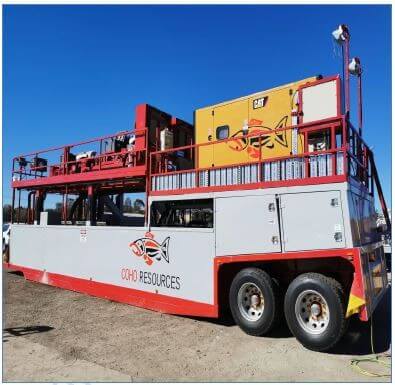
HAZ were involved with a new centrifuge tank being manufactured in Roma and set to work in the CSG fields in QLD.
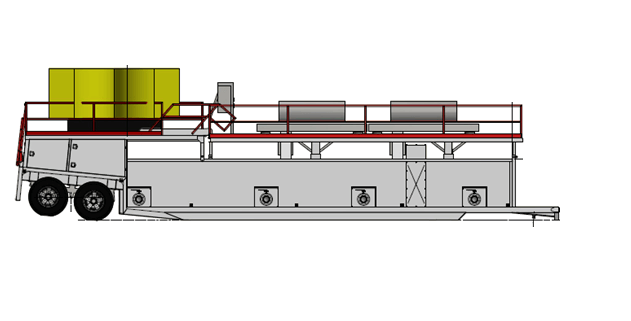
The centrifuges tank was transportable and required to be able to be self-powered therefore requiring a diesel generator set. The general
layout can be seen below .
The Problem
With the design, the diesel generator set location on the tank was at the rear of the trailer and above the 4th fluid tank. Once the area classification was done it was found that according to API 505 that the tanks were considered as part of the active mud system and there for the same area classification was assigned.
From API RP 505, Section 10.4.2.1: “The area around a mud tank located in a non-enclosed adequately ventilated location is classified to the extent shown in API RP 505:1997 (R2013) Figure 33 below.”
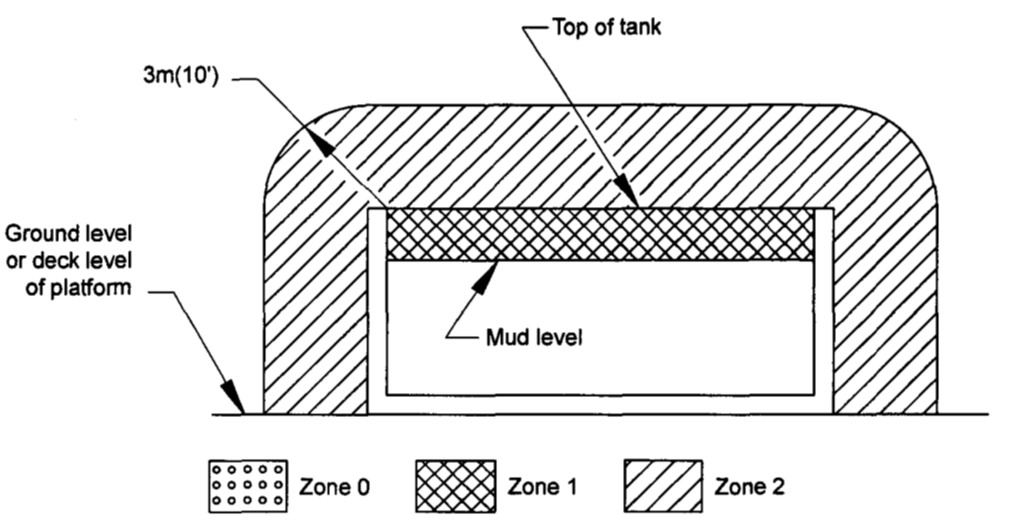
The result of this area classification was what can be seen in the figure below
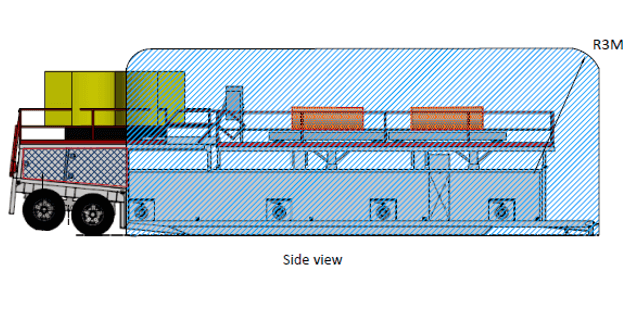
As we all know, if there is a piece of equipment located in hazardous areas then it should be certified, although in this case the genset was not. As we were not able to change the classification as data was not available, it was investigated if the ‘genset’ could be
- Moved back outside of the Zone 2 area
- Made removable on a skid, and once onsite was moved outside of the Zone 2 area and connected
- Connected to rigs power
Moved back outside the Zone 2 Area
The genset was moved back as far a practical to allow personal access to maintain the equipment
Made removable on a skid
This required the use of a forklift, personnel to ensure it has been secured in place correctly, an electrician to connect and electrical test that the unit was safe, and not to mention additional cabling on the ground to move it out past the 3 meter Zone 2 area.
Connected to rigs power
Due to the power requirements of the equipment the rigs that this was being added to didn’t have the capacity to run the additional loads.
The Solution
To keep the ‘genset’ in the current location, HAZ chose to be pragmatic in the approach and was able to identify another way to ensure that the non-certified equipment would not become an ignition source, using Conditions of Control.
Conditions of Control
This is not a new concept although not very well known within this industry. As per AS/NZS 60079.14 Section 4.1
Equipment and systems used in exceptional circumstances, where explosion protected equipment is not available, need not meet the requirements of this standard. In such cases it is only by the application of methods or conditions of control that the required degree of safety can be obtained. Such methods may include the use of procedures and/or the use of monitoring devices, such as gas detectors, or pressure, temperature or flow devices. Depending on the degree and type of hazard involved, the associated conditions of control initiated by the monitoring device may include one or more of the following conditions as appropriate:
- Automatic disconnection of the power supply.
- Automatic initiation of an alarm followed by an associated manual procedure to restore the integrity of the system.
- A manual procedure, whereby one or other of the parameters necessary for an explosive condition is retained under continuous control.
For this installation, a Conditions of Control assessment was undertaken. Using the conditions mentioned above, the following was implemented:
- A fixed gas detection system, whereby upon detection of methane the generator can be shut down
- A procedure for gas detection and start-up after generator trip
- Ongoing gas detection data collection
For the fixed gas detection system, the following conservative percentages were set:
- At 5% of its LEL of Methane (~0.2%) this will trigger an alarm and siren to warn personnel that there is gas present and to then act in accordance with the established procedures.
- At 10% of its LEL of Methane (~0.4%) this will trigger a hard shutdown of the generator, by closing the Air Intake Shutoff Valve. This will shut down the power to all the equipment on the centrifuge tank and require personnel to ensure the area is gas free before starting the diesel generator up and energising the installation (again, in accordance with an established procedure).
- In addition to this, the Battery Box was moved to a new location in the generator enclosure and a Battery Isolation Switch fitted which under the procedure is requires that the Battery Isolation Switch opened when Methane is detected.
Additional Measures Taken
In addition to the Conditions of Control other control measures were implemented with to the generator to meet the requirements of API RP 54 Ed. 4 (2019) - Occupational Safety and Health for Oil and Gas Well Drilling and Servicing Operations – Paragraph 7.1.3 – Internal Combustion Engines:
- 7.13.1 Emergency shut-down devices that will close off the combustion air should be installed on rig and skid-mounted diesel engines.
- 7.13.2 Rig power emergency shutdown devices on each engine should, as operations allow, be function tested without load in accordance with company procedure to determine that they are in proper working condition. The testing frequency may be prescribed by manufacturer or regulatory requirements.
- 7.13.3 Spark arrestors or equivalent equipment should be provided on internal combustion engine exhausts.
After the implementation of the fixed gas detection system and the additional requirements of API RP54 all parties involved with the centrifuge agreed that this solution was the most practical.
Ongoing calibration and monitoring of the gas detection system is undertaken to gather data about the fluid entering the centrifuge tanks. Over the specified time period the data collected can be analysed and further assessment can be made with the ideal outcome of reducing the zonal requirement of the tank.
By setting the detection levels at 5% and 10% of LEL the equipment would be de-energised well before an explosive limit was reached, also indicating upstream of the centrifuge tank that there is gas present, should their systems not detect it.
This material is produced by HAZ. The information is of a general nature only and should not be relied upon. Each set of
circumstances associated with compliance of hazardous
areas and Type
B compliance
is unique and expert advice on your particular circumstances should be sought. HAZ accepts no liability for any reliance on the
information published on this website.