Combustible Dust - The Essentials
Published
Read Time: 5 min
General
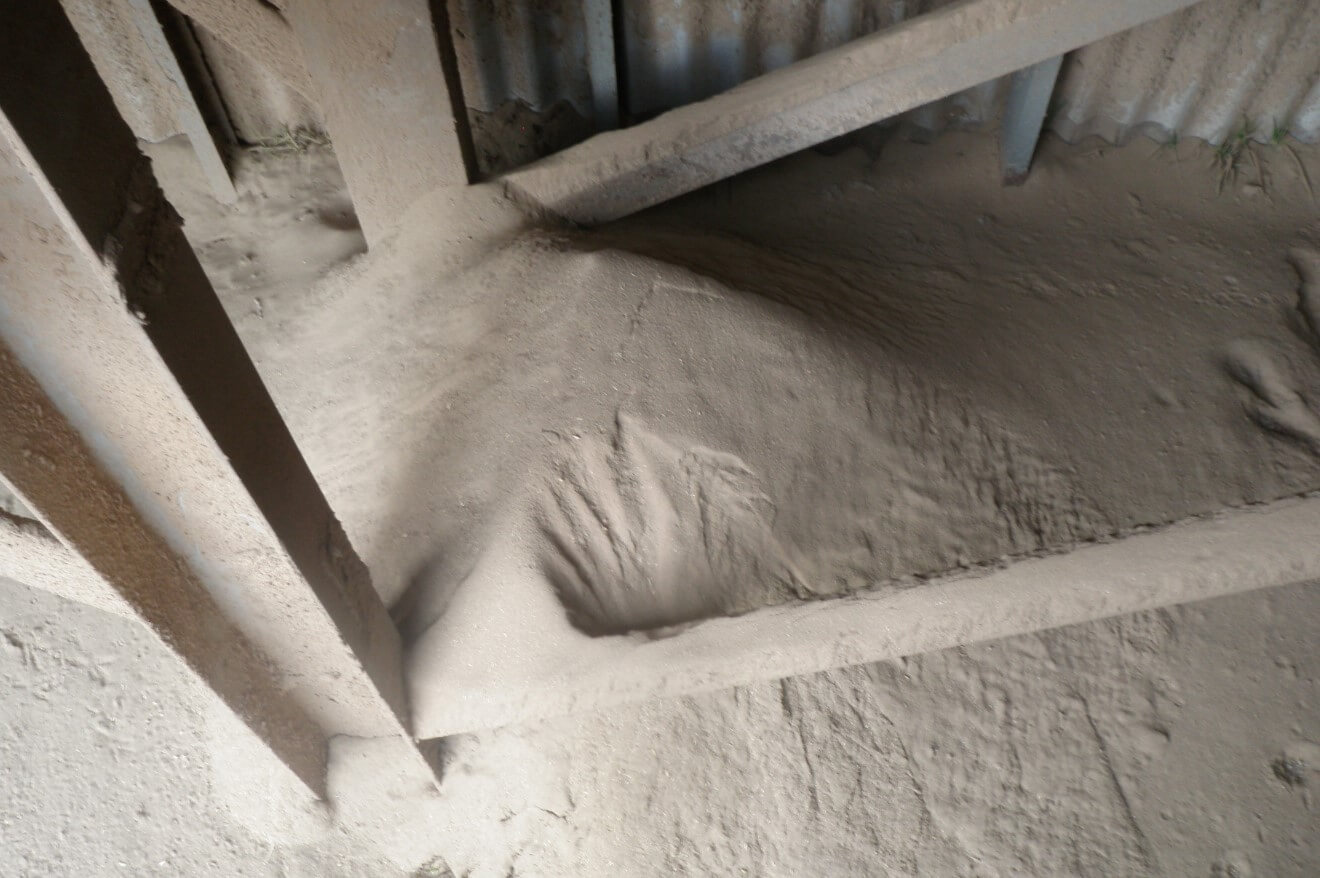
Unlike gas or vapour flammable hazards which only present airborne hazards, with Combustible Dust hazards, both the formation of a cloud in air of the material, and the formation of a layer on a hot surface of the material must be considered.
Dust Explosion Pentagon
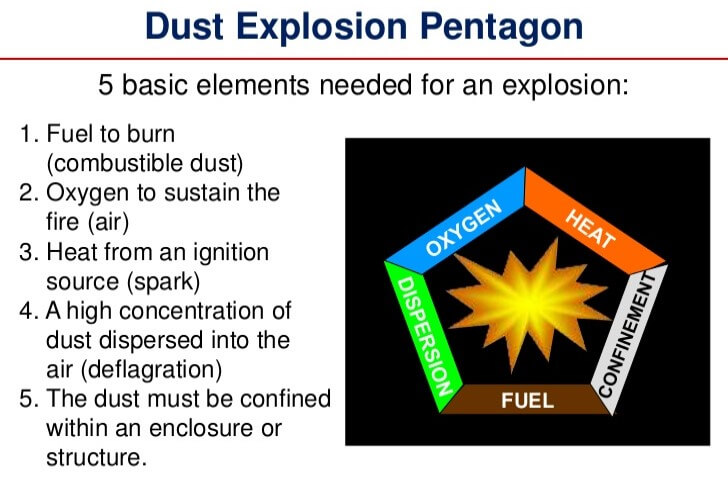
Unlike flammable gases and vapours which only require Fuel, Oxygen and an Ignition Source, Combustible Dust requires two extra criteria in order to cause a conflagration – Dispersion and Confinement.
Dispersion: Combustible Dust requires to be Dispersed in Air in order to react with air. A range of particle sizes is also required. The larger particles agitate the smaller particles, preventing “clumping” that would occur with a uniformly fine dust.
Confinement: In order for a pressure build up to occur that will turn a conflagration of burning particles into an explosion, the mixture must be confined in a comparatively small space. This ensures two things:
- The combustible dust is above its lower explosive limit of “x” g/m3, and
- Pressure will build up until some aspect of the containment vessel fails mechanically.
Potentially Combustible Materials
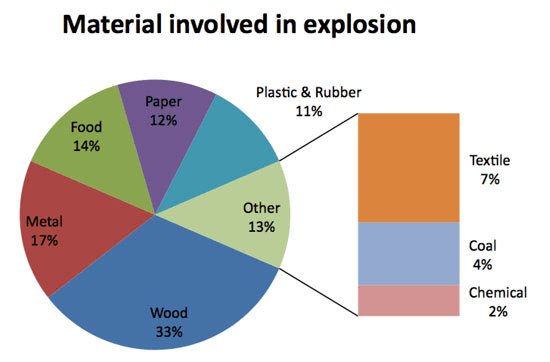
The figure above indicates the most common of combustible materials which form dusts or fibres.
Wood dust is the most common culprit when it comes to combustible dust issues and is often the one most ignored.
Parameters to be Defined
Important Combustible Dust parameters are as follows:
- Particle Size (and range)
- Layer Ignition Temperature (°C)
- Cloud Ignition Temperature (°C)
- Lower Explosive Limit (g/m3) (Note: Combustible Dusts do not have an Upper Explosion Limit (UEL).)
- Ignition Energy (Joules)
These parameters should be provided by either a Testing Station or from the manufacturer of the product whose dust it is (fine carbon powder, materials for 3D printing, etc). There are also web-based data bases which have the results of testing, but these should be used with caution and only if the client agrees and accepts full responsibility for their use.
Dust Clouds
Dust Clouds do form hazardous zones.
- Zone 20 – Continuously or frequently present
- Zone 21 – likely to occur during normal operation and
- Zone 22 – may occur infrequently and persist for only short periods.
It is the Dust Clouds which are produced in a manufacturing or handling process which will determine the type and extent of the above Zones.
Dust Layers
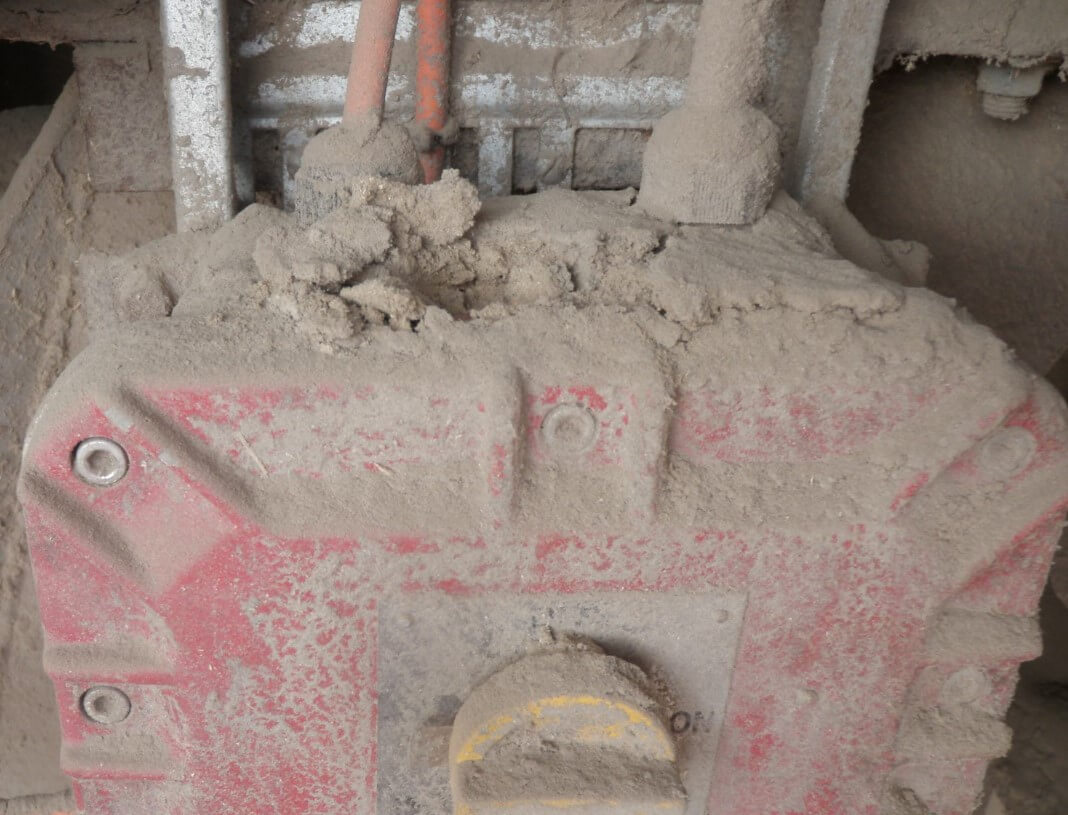
Dust Layers do not of themselves form hazardous areas. However, these are ignition hazardous when laying on the top of equipment and are also a potential source of release if these are disturbed by the operation of the equipment or any other means.
Secondary Explosions
In the example of a coal transfer tower for in and out going conveyors, and where maintenance/housekeeping has been poor, coal dust can form on any level surface (including structural members – all the way to the top of the transfer tower) and on the interior walls of the structure.
Should there be an ignition event such as an arc fault incident in a panel within this building, the explosion from the arc fault will be of the same order or magnitude as that from a flameproof enclosure which failed during the ignition event. In this case, this would be the Primary Explosion. The shock wave from this explosion could well dislodged years of dust build up and form a dust cloud, which does form a hazardous area. Should this find an ignition source, the entire transfer tower could be destroyed by the subsequent (secondary) explosion. There is also loss of life and the resulting fires to consider.
Housekeeping
“Cleanliness is next to godliness” is a very old saying. However, it is true for facilities which create combustible dusts routinely in their operation. AS/NZS 60079.10.2 (Combustible Dust Classification Standard) provides guidance on housekeeping, as does the Combustible Dust Code of Practice, AS/NZS 4745.
Cleaning by water or vacuum extraction by an antistatic proof vacuum cleaner or manual removal are the preferred means. Cleaning by using compressed air will simply cause a massive cloud of combustible dust which is the worst thing that could occur – and which only needs to find an ignition source.
This material is produced by HAZ. The information is of a general nature only and should not be relied upon. Each set of circumstances associated with compliance of hazardous areas and Type B compliance is unique and expert advice on your particular circumstances should be sought. HAZ accepts no liability for any reliance on the information published on this website.