When to use Thread Adaptors
Published
Read Time: 5 mins
What is a Threaded Adapter?
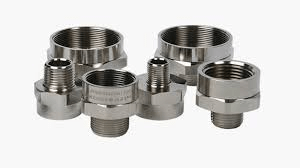
Examples of Threaded Adapters are given below:
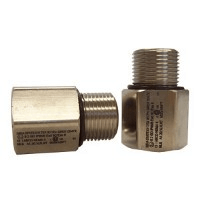 |
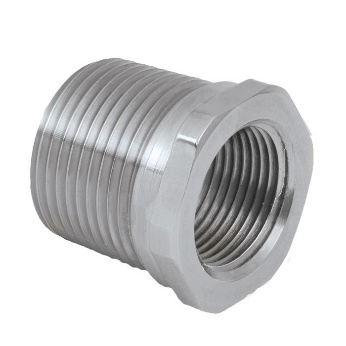 |
 |
AS/NZS 60079.1:2015 Clause 3.17 defines a threaded adapter as follows:
3.17
Ex equipment thread adaptor
thread adaptors tested separately from the enclosure by having an equipment certificate and which is intended to be fitted to the equipment
enclosure without further consideration
When to Use a Threaded Adapter
The limitations of use of a Threaded Adapter are described in AS/NZS 60079.1:2015 Clause 13.2 “Threaded Holes”.
13.2 Threaded holes
Threaded holes in enclosures to facilitate cable glands or conduits entries shall have the thread type and size identified, for example M25
or 1/2 NPT. This may be accomplished by
- Marking of the specific thread type and size adjacent to the hole in accordance with Table 15 of AS/NZS 60079.1,
- marking of the specific thread type and size on the name plate in accordance with Table 15 of AS/NZS 60079.1,
- indication of the specific thread type and size as part of the installation instruction document, with a reference
marking on the name plate in accordance with Table 15 of AS/NZS 60079.1,
The manufacture shall state the following in the documents defining the electrical equipment
a) the place where entries can be fitted; and
b) the maximum permitted number of these entries
Each entry shall have no more than one thread adapter when an adaptor is used, A blanking element shall not be used with an adaptor
The last sentence covers all possibilities:
- Each entry shall have NO MORE than one thread adaptor with a gland, and
- A blanking element (plug or stop as they may be called) shall not be used with an adaptor
No More than One Adapter with a Gland
Adapters are used when the thread size and form of a threaded entry in an enclosure does not match the thread size and form of the gland which is being used for the cable.
While the glands should be purchased to accommodate the correct thread form and size of the enclosure, this is not always possible, due to the size of the cable that must be clamped (or cemented) into the gland.
Therefore, ONE ONLY adapter may be used to allow, in this instance, a smaller gland to be mated to and enclosure with a larger threaded entry.
“Daisy Chaining” a series of adaptors to allow a cable termination is not permitted. Reasons:
- The more adapters you have, the worse the seal on the enclosure will be – with a possibility of flame transmission should an ignition occur in a flameproof enclosure
- A series “string” of adapters is subject to mechanical failure. Some mechanical force on the last adapter could snap an adapter nearer the enclosure. It’s a basic Lever concept. The longer the string the greater the bending moment at the entry to the enclosure.
- There are many suppliers of certified adapters which will literally adapt anything to anything else. These are not hard to find, even if these are not immediately available.
Do Not Use a Blanking Element with an Adapter
Blanking Elements (“plugs” or “stops” in some literature) are available as certified components in literally any thread forms and sizes.
These can be ordered, though sometimes with a lead time to be supplied.
Be Prepared
There are a number of common size changes required, particularly for NPT to Metric when installing North American Equipment with Metric Glands. These should be “on hand” for any installation staff as a matter of course.
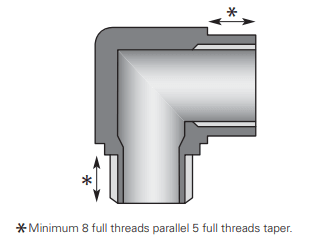
Terminating an Awkward Entry with a Right-Angle Adapter
There are times when, in a cramped environment, a “right angle” adapter will need to be used. This goes towards the adaptor count of “1”. No other adapter may be used in conjunction with a right-angle adapter.
However, the possibility that the flamepath of the equipment may be too close to a structure, necessitating the use of such an adapter, should also be considered. The equipment may have to be moved, rather than use such a device.
This material is produced by HAZ. The information is of a general nature only and should not be relied upon. Each set of
circumstances associated with compliance of hazardous
areas and Type
B compliance
is unique and expert advice on your particular circumstances should be sought. HAZ accepts no liability for any reliance on the
information published on this website.