Interperting North American Marking
Published
Read Time: 20 mins
Interperting North American Marking
Component Certified Enclosures
While the terminology may be different between UL and CSA and IEC based certification schemes, the same principles often apply. This is so for the IEC concepts of “Component Certification” and “Unit Verification”.
IEC and AS/NZS Flameproof Enclosures
Component Certification: For flameproof enclosures, Component Certification indicates that the enclosure has not been tested with any internal components and therefore has no Temperature Classification.
Unit Verification Certification: For flameproof enclosures (and other kinds of enclosures such as Ex n or Ex e), this is certification for one particular configuration of internal and external equipment, with the make, model and certifications (if required) of all included items locked down, with same for same replacement only, and no modifications permitted (unless assessed by a competent authority via a “Fitness for Purpose” report).
North America Explosion Proof Enclosures
Factory Sealed = “yes”: In North America, the concept of Factory Sealed, means the same thing as Unit Verification. An equipment with a “yes” in the Factory Sealed column will be certified with particular components installed with the enclosure itself and in the cover, which cannot be substituted for different components. The confirmation that this is the case is as follows - certification of that the enclosure will have a Temperature Classification allocated.
Factory Sealed = “no”: If the Factory Sealed box states “no”, the equipment was certified as an empty enclosure. There will be no Temperature Classification with this certification. Alarm bells time. This means that while you can put any components you desire into these enclosures and into the cover (switches, lamps, etc), you must have the populated enclosure assessed and/or tested and have a Temperature Classification allocated and to ensure the manufacturers requirements for drilling and a tapping have been met.
If such an enclosure is discovered in the field, with North American markings and no Temperature Classification, then while a Conformity Assessment Document could be raised for the enclosure alone (with perhaps an assessment of calculated Temperature Classifications based on a certain ambient temperature, for a range of prospective power dissipation figures) the entire enclosure, complete with its internal contents, any entries into the enclosure and any separately certified items in the cover would have to be assessed in a Fitness for Purpose report, with the basis of this report being that the enclosure is suitable, as established in the Conformity Assessment Document.
Case Study: North American Certification – Appleton AEB Starter
The following example is for Motor Starter which has been certified by UL (Underwriters Limited) and bears the UL Logo and their Certificate of Compliance number E84577.
Equipment: EGS/Appleton AEB Series
Bolted Motor Starter
Site Hazardous Area: Group IIA T1
Certification: UL certified Certificate
Number E84577
Site T ambient max: ≤
55°C
Full Cat. No.: AE2BB4W1C5T2
Certification Label Details
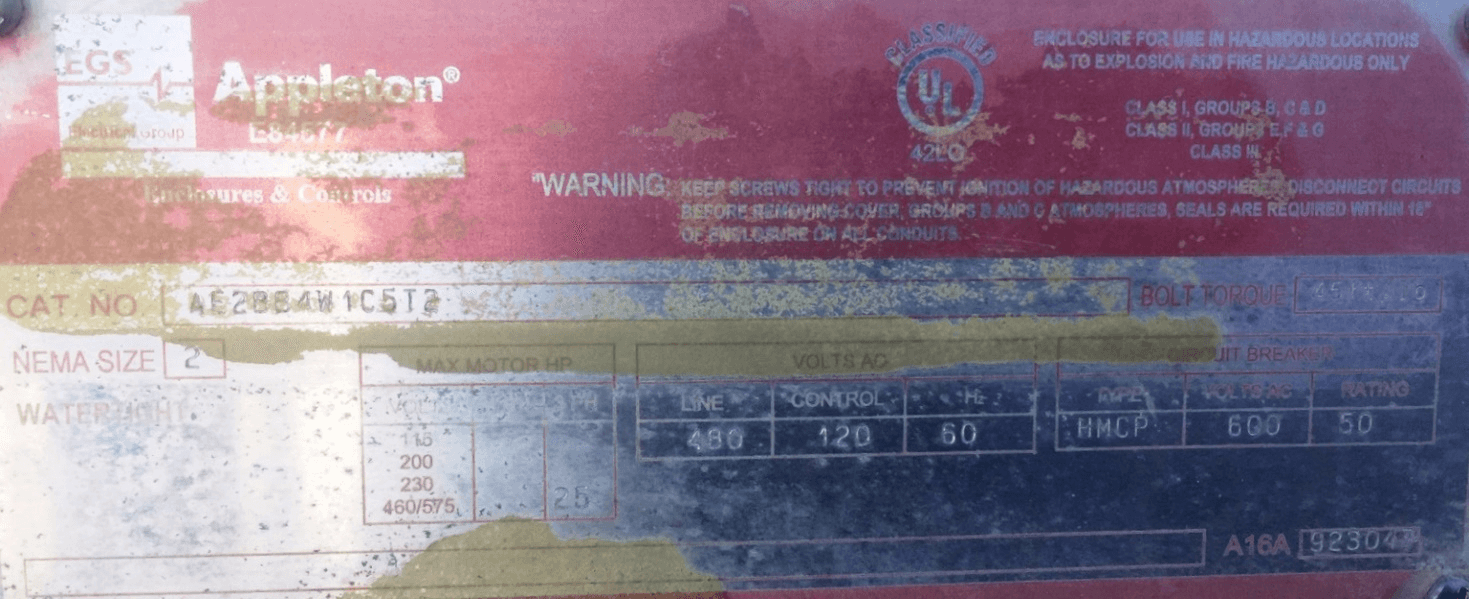
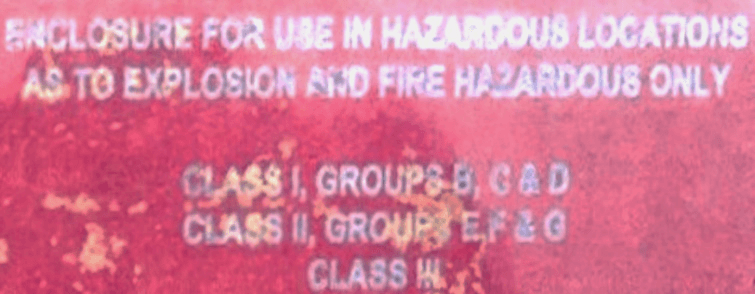
The equipment in the field has the following Nameplate affixed:
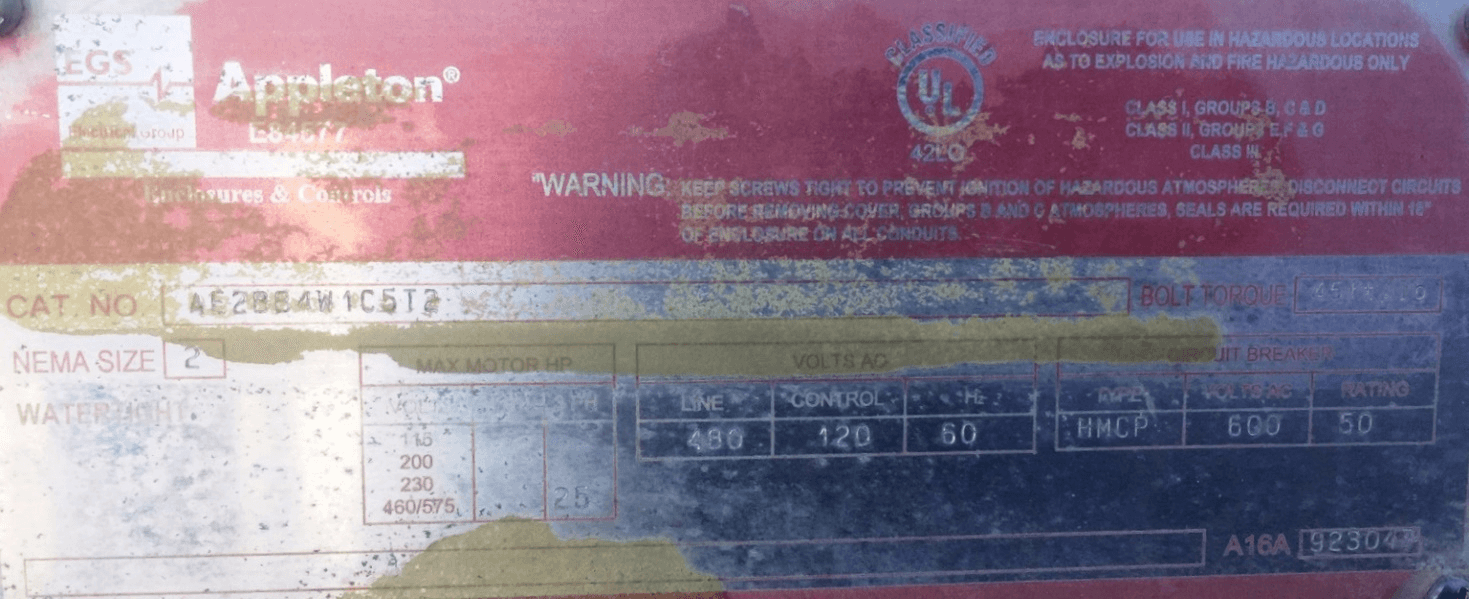
Figure 1 - Equipment Nameplate
The pertinent data from the Nameplate is as follows:
| UL Certification Mark: |
 |
|
Enclosure Brand: EGS/Appleton Certificate Number: E84577 |
 |
|
Certification Details: ENCLOSURE FOR USE IN HAZARDOUS LOCATIONS AS TO EXPLOSION AND FIRE HAZARDOUS ONLY CLASS I, GROUPS B, C & D CLASS II, GROUPS E, F & G CLASS III |
 |
|
Cat. No.: AE2BB4W1C5T2 |
 |
Table 1 - Significant Certification Marking from Nameplate
Certificate Details
The following has been extracted from UL Certificate of Compliance E84577:
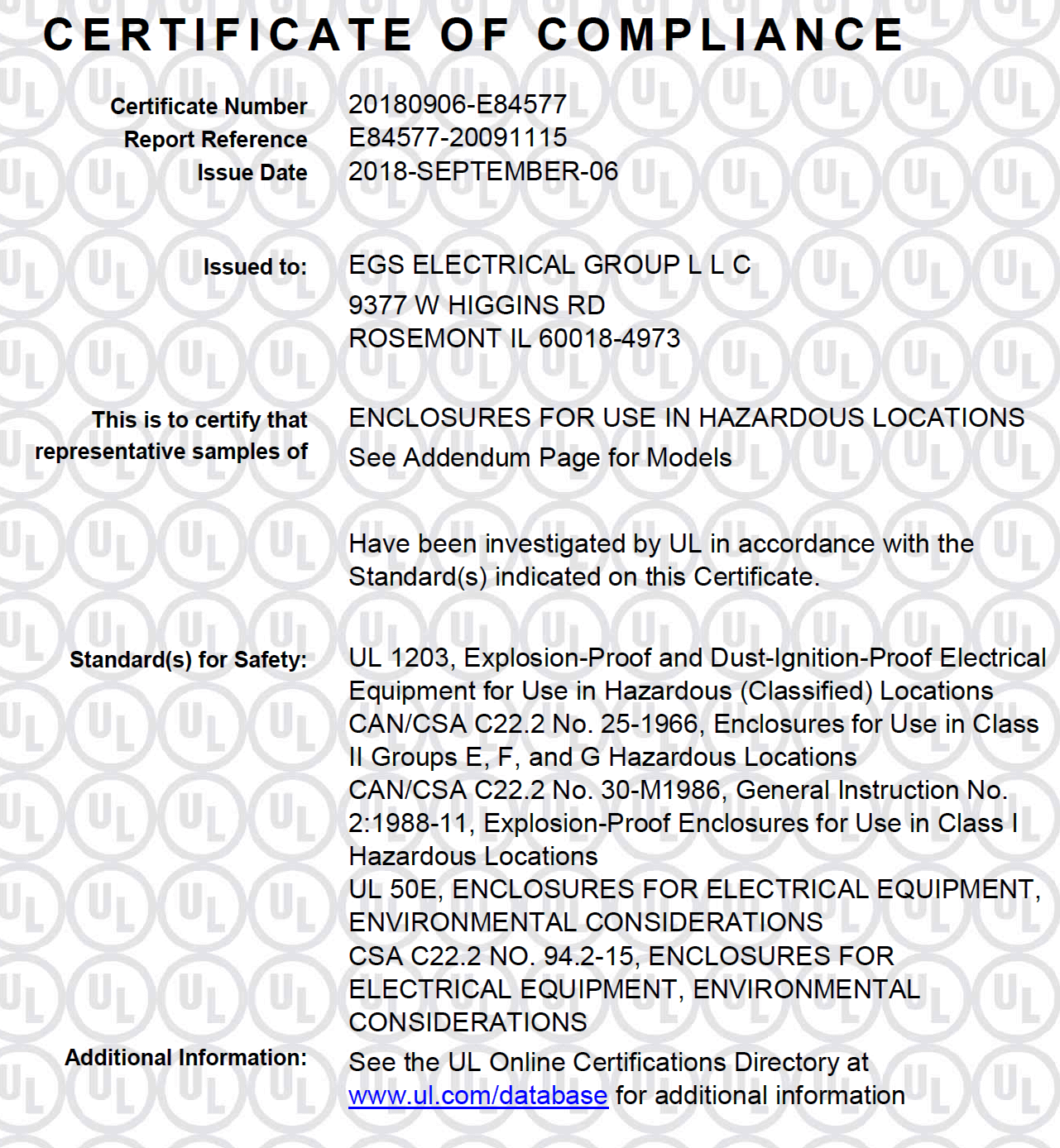
Figure 2 - Extracts from UL Certificate of Compliance - E84577
Comparison Between the Nameplate and Certificate Data
UL Certification Mark
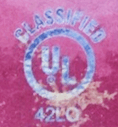
Both the Nameplate and the Certificate of Compliance bear the UL certification mark, as described in Table 1. Both the Nameplate and the Certificate agree.
Enclosure Brand
EGS/Appleton on the Nameplate, and only EGS on the Certificate of Compliance. This is acceptable as EGS own Appleton. Both the Nameplate and the Certificate agree.
Certificate Number
The Certificate of Compliance number E84577 appears on the Nameplate and on the Certificate. While Certificate is marked “20180906- E84577”, the additional numbers are an internal UL reference. Both the Nameplate and the Certificate agree.
Hazardous Area Ratings
Nameplate Details: Certificate Details
CLASS I, GROUPS B, C & D CLASS I, GROUPS C & D
CLASS II, GROUPS E, F & G CLASS II, GROUPS E, F & G
CLASS III CLASS III
Note that the Certificate does not cover the equipment for Group B (= Group IIC Hydrogen), but only for Group C (= Group IIB) and Group D (Group IIA).
There also does not seem to be a supplement or addendum to this certificate. Therefore, the manufacturer’s claims on their Nameplate for Group B cannot be substantiated as this is not included in the current certificate.
This is why you always check the Manufacturer’s Nameplate Data against which the testing station allocated in the Certificate of Compliance/Certificate of Conformity. Mistakes happen – honest and otherwise.
However, as this enclosure’s usage is in a Group D (Group IIA) hazardous area, this is acceptable in this case.
Catalogue Number (Cat. No.)
The Nameplate quotes the Cat. No. as: AE2BB4W1C5T2:

This number is essential if you need to correspond with local agents or to make enquiries over the internet using the manufacturer’s site.
When comparing this with the UL Certificate of Compliance, the result is somewhat generic. A large number of enclosures are covered by this certificate, and the closest match is:

From the information in the certificate, AEBB would be an allowable combination. However, for a full breakdown on the Cat. No., we need to look at the manufacturer’s catalogue.
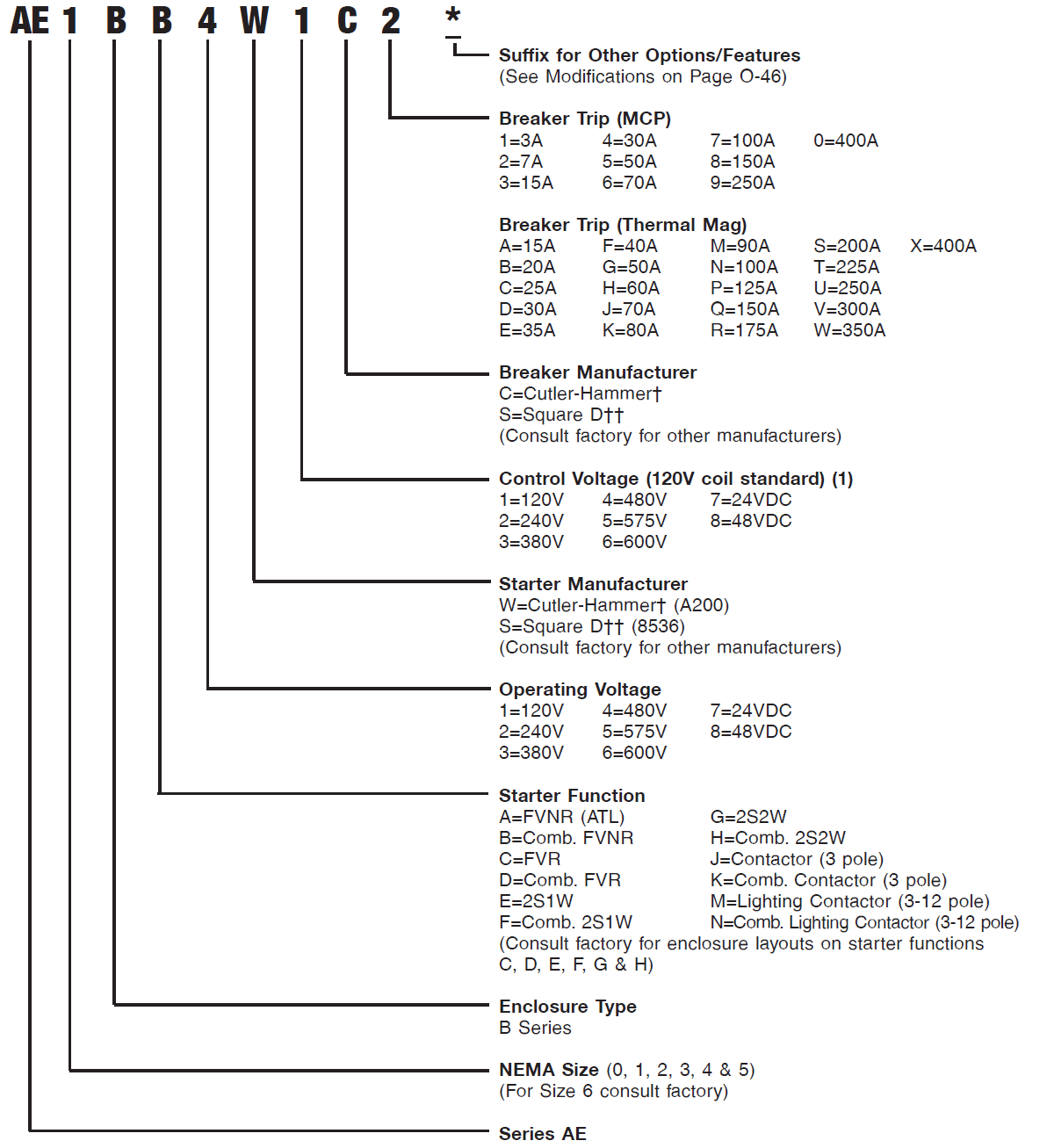
Figure 3 - Catalogue Number Breakdown
Based on the above, the Catalogue Number AE2BB4W1C5T2 would indicate the following:
AE Series AE
2 NEMA Size 2 Enclosure
B Enclosure Type – B Series
B Starter Function – B = Comb. FVNR (FVNR – Full Voltage Non-reversing)
4 Operating Voltage – 480V
W Starter Manufacturer – Cutler-Hammer
1 Control Voltage – 120V
C Breaker Manufacturer – Cutler-Hammer
2 Breaker Trip – 7A
T2 Other Options: T2 – Fused CPT. 100VA – AFCPT100 (NOT a temperature classification)

Figure 4 - T2 Options for AEB Series Enclosure
On-Line Data
Now to check the enclosure details based on current internet data. Emerson is an agent for Appleton Enclosures. Open the EMERSON website:
Scroll down to PRODUCTS and enter the full Cat. No.: using capitals and numbers into the Search Products box. Only one selection will appear:
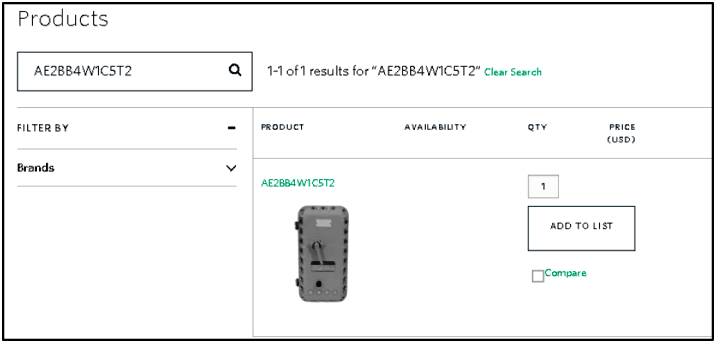
Figure 5 - Product Found
Click on the image or the green text (as per Figure 1). The following page will appear:
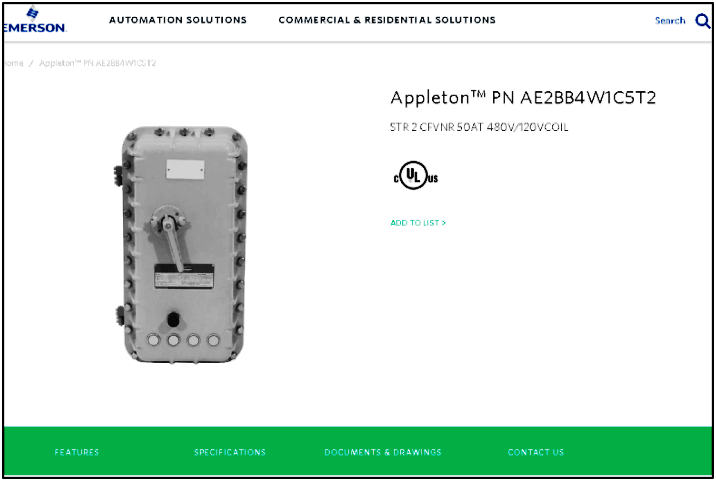
Figure 6 - Product Details
Click on “Documents and Drawings” TAB. The following will appear:
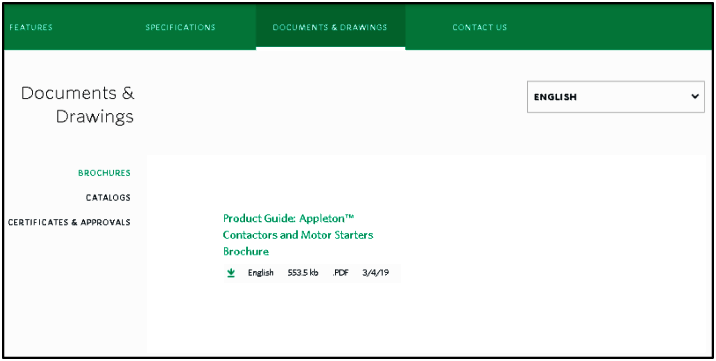
Figure 7 - Product Brochure
Click on the “down arrow” – 553.5 kb to view the Product Guide: Appleton ™ Contactors and Motor Starters Brochure. The following document
will appear:
Figure 8 - Front Cover of Brochure
Scroll down to Page 3. The table indicates what certifications this particular model and range of start has:
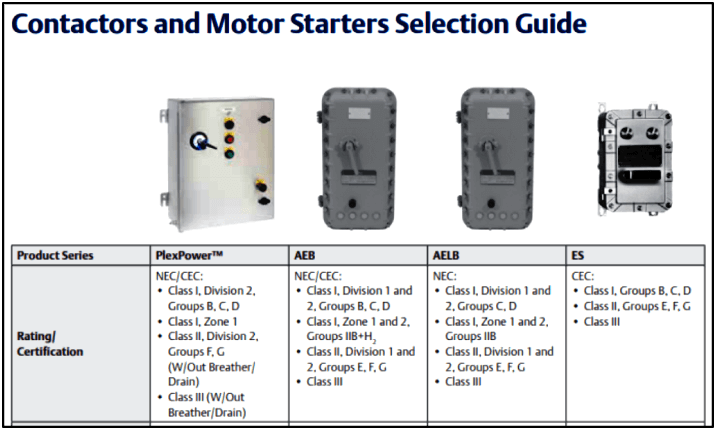
Figure 9 - Certifications for AE Series Enclosures
In particular, look at the Factory Sealed comments under the Certification Agency statements:

Figure 10 - Certification Agencies for AE Series Enclosures
Referring to the information in Figures 9 and 10:
The centre two columns in Figure 10 (which align that align with the AE… series in Figure 9), state that the certification is “UL, cCSAus” and “UL”. “UL, cCSAus”. This indicates that this enclosure variety has both UL and CSA certification, which means that the enclosure complies to UL and CSA standards. In recent years, UL and CSA standards have been “harmonised” which means they are basically the same document.
If the “Factory Sealed” statement was “yes”, then the enclosures will have a defined set of equipment types and ratings mounted inside and through the enclosure cover, and the enclosure has been certified as a populated one with particular contents installed. Again, this is like the IEC “Unit Verification”. Such a certification would have a Temperature Classification.
If the “Factory Sealed” statement was “no”, as it is in this case, then these enclosures are certified as empty enclosures only (like an IEC Component Certification). Such a certification would have no temperature classification. This is the case for the sample Appleton enclosure.
Parallel Certification – CSA and UL Certificates of Compliance
Any given enclosure which has been dual certified by UL and CSA such as this enclosure, will have both UL and CSA Certificates of Compliance, which are independent of one another. In this example, and referring to the manufacturer’s data sheets, describing UL certification and CSA certification for the same equipment:
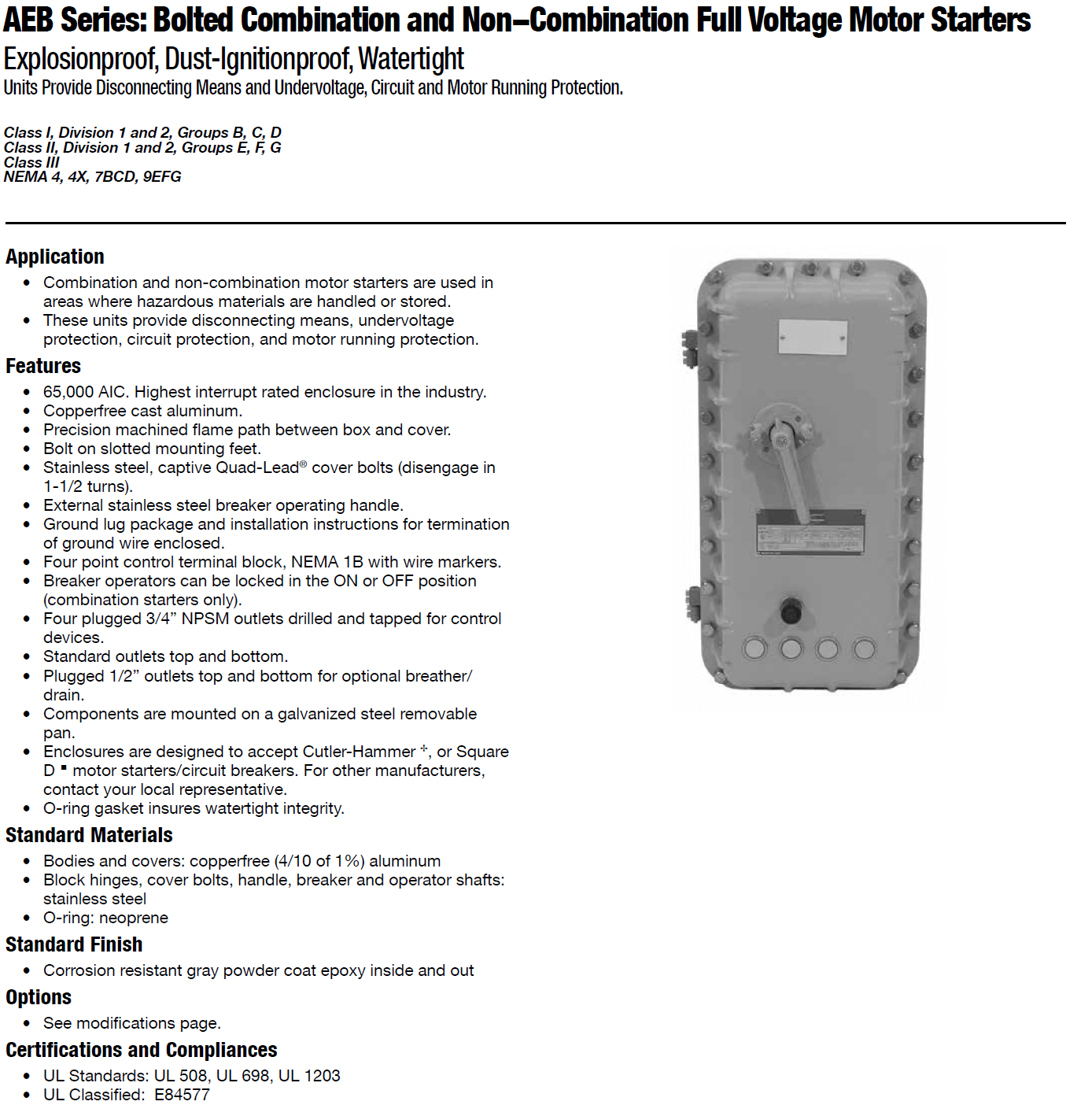
Figure 11 - UL Certification Details - E84577 – Datasheet No. 46137
This datasheet states compliance to UL 508, 698 and 1203, and UL Certificate of Compliance E84577.
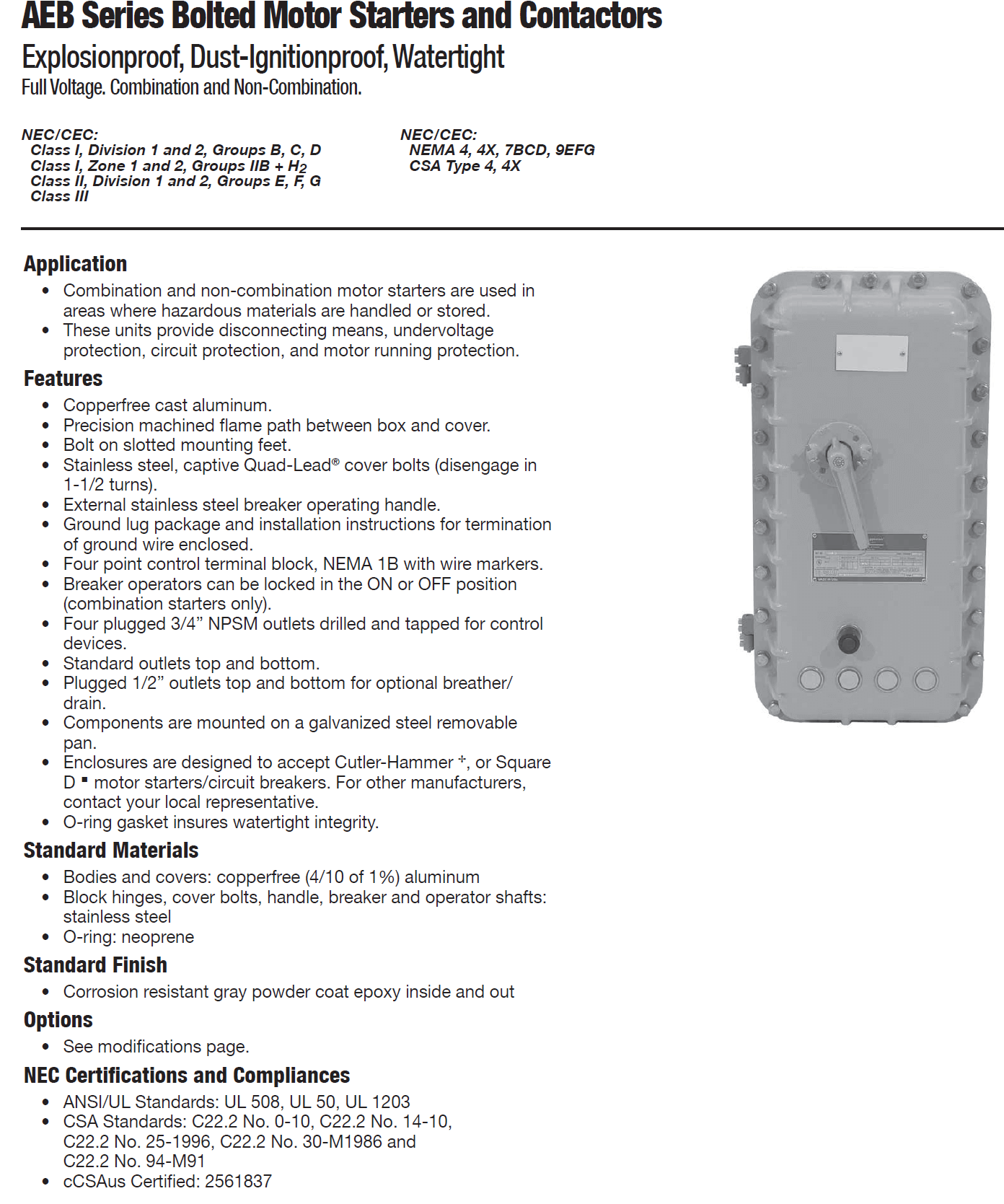
Figure 12 - CSA Certification Details - 25618377 – Datasheet 1277724
This datasheet states compliance to UL 508, 50 and 1203, as well as compliance to CSA standards C22.2 No 0-10, No. 14-10, No.25-1996, No. 30-M1986 and No. 94.M91, and CSA Certificate of Compliance 2561837.
Why Investigate Parallel Certification?
Some standards are easier to establish conformity to than others. For example, CSA C22.2 No. 30-M1986 aligns very well with AS/NZS 60079.0:2006 and AS/NZS 60079.1:2006 requirements for Flameproof equipment. The equivalent UL standard, UL 1203 is less well aligned to IEC based standards.
However, as the equipment has clearly been certified to both standards by reputable organisations, and there is traceability from one set of certifications to the other by:
- Examining both Certificates of Compliance (UL E84577 and CSA 2561837) to confirm that the same equipment is described in both.
- Examining the equipment datasheets to confirm that the same equipment has been stated as being certified to both.
Once credible traceability has been established and documented in the Methodology are of the Conformity Assessment Document (CAD), then you can proceed to assess conformity to the better aligned standard.
However, while the end user of the CAD may be satisfied with this approach, some regulators may be unwilling to accept assessment to CSA standards when only the UL certification is marked on the label. It is therefore essential to close the traceability loop by obtaining a letter from the Manufacturer or their Agent, stating on their letterhead, that both certifications describe identical enclosures and that the marking of the UL certification does not limit the compliance of the equipment.
This material is produced by HAZ. The information is of a general nature only and should not be relied upon. Each set of
circumstances associated with compliance of hazardous
areas and Type
B compliance
is unique and expert advice on your particular circumstances should be sought. HAZ accepts no liability for any reliance on the
information published on this website.